Luggage rack brackets

Above the EVC cab is a luggage rack – a plastic cover over the roof that has 2 handles for strapping boxes, bags, etc (see my post: Storage Box Above Cab). I received a stainless steel bracket kit to replace the existing steel brackets that attach this piece of plastic to the roof, so I thought I would take this piece of plastic off and see just what is going on underneath – man, I am glad I did!

dirt

Even if you have no intention of replacing the brackets, you should remove this luggage rack and clean underneath – mine was filthy!

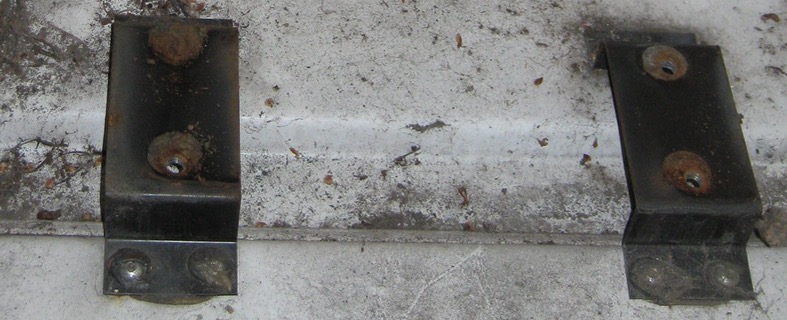
The existing brackets are steel, attached with pop rivets and adhesive – adhesive ONLY on one side of the brackets. On my EVC, one bracket was only in place with pop rivets – the adhesive had failed on the other side.

Go Westy sells a stainless steel bracket replacement kit – this replaces the existing brackets with stainless steel ones, and provides for pop rivet mounting on both sides.

You need to clean the roof very well, drill some holes, seal with silicone, and install some pop rivets.

  • Two installation tips:
    1. There is not a hole drilled in the front bracket for the screw that connects the luggage rack to the front bracket – you will want to drill this hole BEFORE you mount the front bracket to the roof. Just use your old bracket as template for where to drill this hole. Drilling in stainless steel requires a slow drill speed and lots of pressure – you do not want to heat up the steel, you just want to “cut” it with the drill.
    2. While drilling the pilot holes for the pop rivets that mount over the headliner, you need to make sure you do not drill too far – you can make a drill stop with some fuel line – like so:

drill stop

Here the roof is all ready for the install:

clean

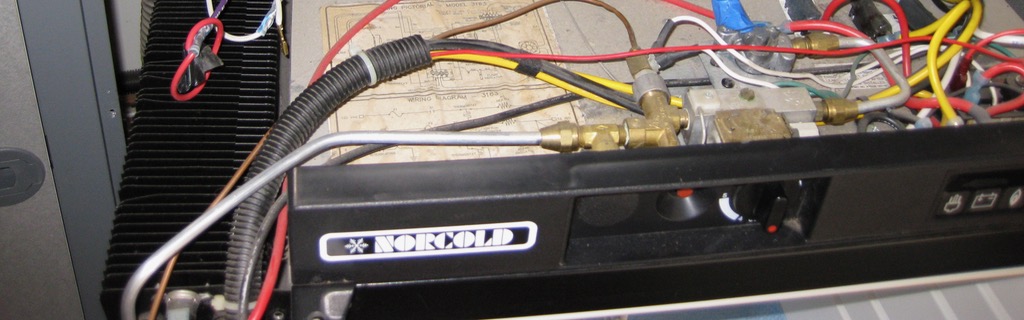
Norcold 3163 fridge removal and cleaning

Decided to tackle the job of removing the Norcold fridge (one of our favorite parts of the van) to check just what IS the condition of the burner box (the part that can be sometimes hard to start, or hard to keep lit). If you own a Eurovan Camper, you really owe it to yourself to pull this fridge out and see what makes it tick – it will take the mystery and fear out of the thing.

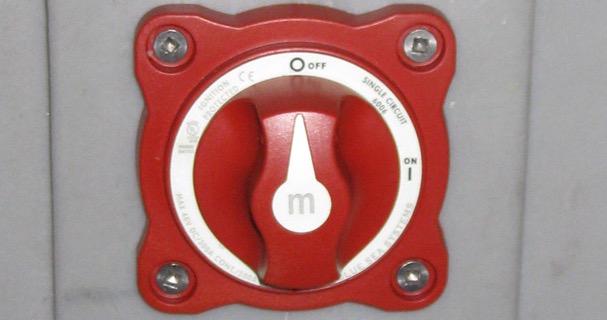
If you are comfortable working with a gas barbecue, you can do this! Before you work on your fridge, just make sure the propane is OFF, that you are not plugged into “shore” power (AC), that your “house” battery is disconnected, and put out any cigarettes or open flames. Make sure you have some ventilation, too (like the van door open and maybe working in a carport or garage with the door up).

This is not that difficult – just sorta fussy, and you do need to be able to lift and move the fridge. You need the following tools and supplies:

  • 2 crescent wrenches (maybe 3, you’ll see why later) or a 13/16, 5/8 and probably a 9/16 (depending on what era your fridge is) open end wrench
  • Good philips screwdriver – make sure you have a good one – some of these screws are tight!
  • Compressed air or a “can” of air
  • Shop vac
  • Round file to modify the mounting flanges in the van to ease reinstallation and later removal
  • Permatex 81878 “Ultra Copper” silicone – for resealing the burner box – the existing gasket will fall apart when you remove it – or a new gasket
  • Soapy water or “gas leak detecting fluid” from a hardware store
  • Piece of thin plywood or similar to protect the van floor

Continue reading

Trailer wiring

We have a trailer hitch on our van (from Eurocampers) but we have had no power connection for hauling a trailer – until now. I wanted something that would handle both 4 pin an 7 pin connectors, so I got such a beast from Hopkins – here is it installed:

The trick was just how do I wire this into the Van? As usual, the ev_update list came through (thanks, Paul!). The way I did it was to connect everything on the passenger side – behind the taillight.

Here is what you need:

  • “Cold shrink” tape – AKA non-adhesive wire harness tape – can’t remember where I got mine (Eastwood?) but here is a link: Tape
  • Super 33 electrical tape – the only electrical tape to buy
  • Tie wraps
  • Hopkins connector
  • Hopkins trailer wiring isolator
  • Patience
  • Flexible (or small) hands
  • Wiring diagram of the taillights

Continue reading

Green Refrigerator Indicator

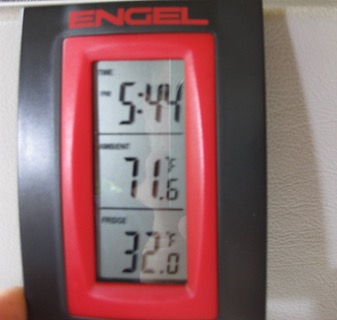
When we are driving, we switch the fridge onto battery power. If we are just going to stop for a short time, or if is in not too hot outside, we will switch the fridge off. The trick is how to remember that the fridge is on or off – it is pretty hard to see the indicator panel of the fridge while driving, and I can bug the passenger, but we came up with this solution:

Fridge Indicator:

OFF

ON

MaxxFan roof vent/fan

This is going to be a long post – I have lots of photos! I finally installed the Maxxair MaxxFan Ventillation Fan

I bought a few months ago – this was different than any other installations I have done, as it is a “destructive” install – once you do this, there is no going back to the original roof vent. Let me sum this up by saying that in my case, it was REALLY worth the time and trouble to do this. Here is why I wanted to undertake this:

I wanted to improve the ventilation in the van when parked with the top down – I have some cool “armored” cab vents, but having those and a passive roof vent was just not cutting it – especially traveling with a cat. I had heard about the MaxxFan vents for years (integrated rain cover, multi-speed fan, reversible direction fan, etc) and saw that someone had made the install on a Eurovan, so I decided to try it myself.

Summary:

  • You can drive at freeway speeds with the vent open
  • You can really cool off the van when parked by using the fan
  • You can open and close the vent while driving (the driver can reach the control – just as on the stock vent)
  • You can keep the vent open during rain storms

Continue reading

Coffee

Coffee is a very important part of our life – here is a shot of our coffee “bar” (still under construction, as it needs tiles, etc):

When travelling, we HATED trying to find good coffee – stumbling upon good coffee is one thing, but stopping for lunch in the middle of nowhere and NOT having a good cup o’ joe after the meal is UNTHINKABLE! So we have perfected what we think is the best method for making coffee on the road (easy prep, easy clean up, great coffee).

  • You need to use the best coffee – Cafe Mam – great people, great coffee, get the “Mocho” blend.
  • You need a “Moka” stovetop espresso pot – I have found the Bialetti Moka Express to be a great one
  • You need to get a “Dosacaffee” – this makes filling your Moka mess-free

Here is an image of the Dosacaffee:

Grind up your beans before you leave (I know, fresh grind is better, but you do have to make SOME compromises on the road) – fill your Dosacaffee up, as well as a 1lb empty coffee bag (just pick one up at the local supermarket coffee grinding area). A full Dosacaffee and a 1 lb bag will last 2 people 2 weeks (2 pots per day).

When you are done with the Moka, just lay it in the sink for clean up later (if you in a hurry), or just wait a bit and empty the grounds out when the pot is cool enough to handle. The grounds will be VERY dry, and just a little water is all it takes to clean up. Way easier than using a French Press.

BTW – the best “stumbled upon” coffee experience for us was finding the Kiva Koffeehouse outside of Escalante, Utah – amazing place, great people, good coffee, good food, great local crafts for sale.

Adding a rear hatch

One of the things that Winnebago should have done is create a rear hatch for the coach battery compartment. Many others have done this (where do you think I found out the model of hatch to use?), but I wanted to show how really easy it is, as well as the specific approach I used.

Here is where it will go:

I created a cardboard template from the hatch I used – a BOMAR G7711-11 from Pompanette – they are listed in their online catalog under “access hatches”. I chose a black one – they also come in white. I made sure that the hatch would fit in the space – the hatch has quite a large “lip” (flange), and takes up almost the entire space – which I wanted (for easy access). I traced out the area to cut.

I then used blue masking tape to further outline the area, and provide a surface to tape the “painters plastic” to (to keep any plastic bits out of the van).

I used a Dremel tool with a plastic cutting attachment (on my drill this is a coarse spiral drill) to cut the plastic. You need to move the Dremel tool back and forth in the cut so that the hot plastic does not “stick”. You might be able to use a hand tool (like a small hacksaw), but the plastic get VERY thin near the bottom – and it is VERY flexible, so that may be a real pain to do – that is why I chose the Dremel. Here is what you get when you cut the hole out:

Now you need to add something to stiffen the opening, and provide a strong surface to screw the hatch down on. I used aluminum flat stock.

Then you just bolt up the hatch – I uses Stainless Steel bolts, as I am a sucker for spending $ at the hardware store….

That really is all there is to it! Now I can easily get to my wheel chocks, hand tools, etc. Here is the hatch closed: